

A COMMUNIQUE ISSUED AT THE END OF THE 26th ANNUAL NATIONAL CONFERENCE OF THE ASSOCIATION OF INDUSTRIAL PHARMACISTS OF NIGERIA (NAIP) HELD FROM 5th– 8th OF JULY, 2023 AT CARLTON SWISS GRAND HOTELS LIMITED, 47B, NZA STREET, INDEPENDENCE LAYOUT, BEHIND GOVERNMENT HOUSE, ENUGU, ENUGU STATE, NIGERIA
1.0 Introduction
The Association of Industrial Pharmacists of Nigeria (NAIP) is a technical arm of the Pharmaceutical Society of Nigeria (PSN) and the professional body of all registered and licensed Pharmacists in the Pharmaceutical Industry within Nigeria, dedicated to the promotion of Pharmacy profession, Pharmacy education/research and Pharmacy practice within the Industrial sector. NAIP having over 500 companies as corporate members representing over 1000 Pharmacists from all over Nigeria, held the 26th edition of its annual national conference on July 5th – 8th July, 2023 at the Carlton Swiss Grand Hotels Limited, 47B, Nza Street, Independence Layout, behind Government House, Enugu, Enugu State.
The conference involved a keynote address on the theme, sessions on the sub-theme, and panel discussions to brainstorm and provide solutions to the myriad of problems plaguing Nigerian Industrial Pharmacists.
The theme of the conference: The Role of the Pharmaceutical Industry Towards Achieving Medicines Security in Nigeria was addressed by the keynote address given by Prof. S. I. Ofoefule, FPSN of the Department of Pharmaceutical Technology and Industrial Pharmacy, University of Nigeria, Nsukka.
The first technical session titled: A New Growth Formula for Pharmaceutical Manufacturing in Nigeria was by Pharm. Kunle Oyelana, FPSN, MD/CEO Glaxosmithkline, Nigeria.
The second technical session titled: Attracting and Retaining Contract or Toll Manufacturing, Givers and Receivers Perspectives was delivered by Pharm. Yetunde Adigun, Technical Director, Swiss Pharma Nigeria Limited.
The Conference also featured a Panel discussion with Prince Chijioke Ofomata FPSN as the lead discussant while the Panelists included Pharm. Mrs. Ifeanyinwa Grace Ohiaeri, Director, PCN Southeast; Pharm. Valentine Okelu, Executive Director Sales/ Marketing, May & Baker PLC; Pharm. Ekene Christopher Aguolu, MD/CEO Ecomed, Prof. S. I. Ofoefule, FPSN of the Department of Pharmaceutical Technology and Industrial Pharmacy, University of Nigeria, Nsukka and Pharm. Declan Ugwu from NAFDAC.
2.0 Attendance /Acknowledgements
The opening ceremony was chaired by His Royal Majesty, Igwe Oranu Chris Chidume Eze Ana-Ukwu, the Eze Igulube of Omor, Anambra State. Other dignitaries present included Dr. Ifeanyi Agujiobi, Permanent Secretary, Enugu State Ministry of Health representing the Executive Governor of Enugu State; Prof. Cyril Odianose Usifo FPSN, President, Pharmaceutical Society of Nigeria (PSN); Pharm. Udeorah Egbuna FPSN, Deputy President PSN South; Pharm. Gbenga Falabi FPSN, National Secretary PSN; Pharm. (Mazi) Sam Ohuabunwa FPSN, OFR, Immediate Past President, PSN; Pharm. Ken Onuegbu FPSN, National Chairman NAIP; Pharm. Amaka Okafor, representative of PCN Registrar; Pharm. Madubuattah Louis, representative of DG NAFDAC; Pharm. Mnena Scholastica Lan FPSN, National Chairperson of ALPS; Dr. Ambrose George Ugwu, Registrar, Enugu State University of Science and Technology; Pharm. Festus Ejepke, Chairman PSN Enugu state; Rev. Sis. Nora Morris Anyim representing the Mother General of Daughters of Divine Love; Rev. Sis. Jane Francis Chioke, CEO of Faith based Centre Medical Foundation; Dr. Ezekiel Olugbenga Akinkunmi, National Chairman of NAPA; MD/CEOs of Pharmaceutical companies across the Country.
The conference was also attended by NAIP Executive and Council members as well as NAIP delegates from eleven states including Abia, Anambra, Delta, Edo, Enugu, Kano, Kwara, Lagos, Oyo, Imo and Plateau states.
Deep appreciation goes to all the executive committee members, members of the conference planning committee, our sponsors, special guests, association s members, secretariat staff, vendors and all those who contributed to the success of the conference.
3.0 Summary of Discussions
The following is a summary of discussions made during the speeches, paper presentations, technical sessions, panel discussions, and contributions of participants:
Nigeria contributes less than 2% to the global pharmaceutical market.
A precondition to medicine security is localized manufacturing.
Local production of essential medicines has the potential to reduce the infiltration of falsified and substandard medicines as well as improve the economy of the country.
Challenges facing the pharmaceutical industries include lack of infrastructure, weak industrial linkages, weak technology, and engineering base, lack of petrochemical industries to enable API production, poor funding, inadequate incentives, high and multiple taxation, dysfunctional supply chain, brain drain of professionals, inconsistent fiscal and monetary policies, etc.
In addition, Nigeria fully relies on other Countries like India and China for Active Pharmaceutical Ingredients and excipients and this dependency is worrisome.
The Nigerian Pharmaceutical Industry due to its size and clout can be trusted to produce and distribute quality medicines and is expected to take the lead in solving Africa’s problem.
Collaboration is key for the Pharmaceutical Industry operators as well as collaborations with others like academia and research institutes.
Contract and toll manufacturing should be explored instead of attempting to embark on full-scale production particularly where there are inadequate funds.
The development of actionable strategies that can be implemented is very important to promote medicine security in the Country with the new Government policy of 60% local and 40% imports in focus.
Since NAFDAC is not a business agency, they should be wary of the levy, fees, and stringent policies and rules imposed on Pharmaceutical Companies.
The issue of restriction of the number of products to be registered per quarter by NAFDAC is not acceptable because it sets pharmaceutical companies backward in terms of planning, and it reduces the employment of Pharmacists as well as business opportunities.
The issue of the Common Technical Document (CTD) format of dossiers is still a major hindrance to the registration of pharmaceutical products.
4.0 Key Outcomes and Decisions
In the light of the observations made, conference arrived at the following:
- A holistic approach requiring the active involvement of all stakeholders as regards medicine security in Nigeria must be employed.
- There is an urgent need for the drafting and implementation of a National strategic plan (Master plan) for the development of Pharmaceutical Industries in Nigeria. The drafting of the blue print should be championed by NAIP and PSN.
- Regulatory bodies must be humane in their approach to ensure the quality of drugs being produced as well as promote local manufacturing.
- Cooperation and collaboration without unnecessary competition among Pharmaceutical Industry in the form of contract manufacturing is the way to go. However, well written contract agreements must be in place.
- Government must initiate and implement policies and Incentives that will promote, protect and grow the local Pharmaceutical Industries.
- Government must also provide the enabling environment for pharmaceutical companies to thrive. This includes the provision of infrastructural facilities, ensuring the peace and security of lives and properties among others.
- CTD format of dossier should not be made as a compulsory requirement by regulatory bodies for locally consumed products except if they have to be exported.
5.0 Follow-up Actions
The conference participants expressed their commitment to partner with the regulatory bodies, Government as well as other stakeholders in activities that would be leveraged towards ensuring the availability of essential medicines consummating the quest for quality health for all Nigerians.
NAIP will set up a committee that will come up with a blueprint to enhance medicines security in the Country which will be presented to the Government for consideration.
6.0 Closing
NAIP, as a major stakeholder in the Nigerian Pharmaceutical sector, reaffirms its strong commitment to providing education, strategic guidance, ethical practice in achieving medicines security in Nigeria thereby ensuring the health of Nigerians.
Pharm. Ken Onuegbu FPSN
National Chairman
Pharm. Joy Adeshina FPCPharm
National Secretary
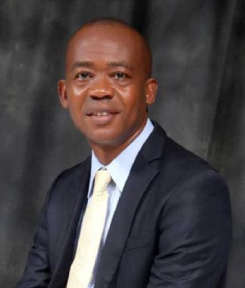
The private sector-driven process to put Nigeria on the road to strategically reducing the country’s very high dependence on importation of over 70 percent of the drugs used in the healthcare system in the long term got an encouraging uptick when the Ebonyi State government under the leadership of Engineer David Umahi, the South East apostle of massive infrastructural development welcomed initiative of the National Association of Industrial Pharmacists, NAIP, to create an integrated pharmaceutical production city in the state.
NAIP appointed Mazi Sam Ohuabunwa, as chairman of the Special Purpose Vehicle, SPV, it created to drive the process. Ohuabunwa, a seasoned pharmacist and corporate administrator, is the immediate past president of the Pharmaceutical Society of Nigeria and former pioneer managing director of Neimeth Pharmaceuticals Plc.
In this interview, Chairman of NAIP and Managing Director of Tricare Pharmaceuticals Limited, Ken Onuegbu, talks about the huge project.
PSN national conference is usually a forum for articulating positions on government policies that affect the practice of the profession. What can ordinary Nigerians look forward to as an outcome of the conference?
There was a call on the Federal Government to put in place some intervention measures that will ensure medicine security in the country. As a nation, we cannot actually say we are a sovereign nation or truly secure if 70 percent (or more) of the drugs we are using in the country are imported from India or China. The PSN used the opportunity of the conference to hammer on that; there is need for the government to galvanise the process for turning petrochemicals into precursors for the production of active pharmaceutical ingredients (APIs), which will boost the production of drugs in the country. We made a clarion call on the government to put necessary infrastructure in place that will radically improve industrial production in the country. When these things are put in place, many Nigerians who are eager to invest in pharmaceutical industry will readily do so. Even professionals in the industry like myself will also invest. Moreover, we will be able to attract institutional investors and venture capitalists. But if the government does not resolve these issues, no investors will put money into the pharmaceutical industry. The current situation is a nightmare.
In 2023, a new administration will take over. Behind the scene, is the Pharmaceutical Industry canvassing policy frameworks with the leading presidential candidates and their own policy experts?
Yes, the PSN is actively working in this regard and the national body will come up with a robust communique that will layout a way forward and a policy statement, which a listening administration can adopt and use to create a revolutionary turnaround in local drug production as a strategic national economic security agenda. I have no doubt that the dynamic PSN leadership which is led by Professor Osifo is on top of this vital issue. As the country is preparing to usher in a new administration, the PSN is also getting ready to present a very robust policy document which the incoming administration can use to resuscitate and grow the local pharmaceutical industry. I believe very strongly that the PSN leadership will arm the next administration with a strategic plan for repositioning the pharmaceutical industry which is virtually in a comatose state. The Pharmaceutical industry requires radical intervention that will guarantee the local production and distribution of highly efficacious drugs that will be affordable and available, not the current arrangement that depends on importation. That way, we will be producing 70 percent of our drug needs while importing only 30 percent. For the past one year or so, the conversation in the industry has been focused on drug security.
What is the status of the research collaboration between the National Association of Pharmacists in Academia, NAPA and NAIP?
The collaboration with NAPA is ongoing, dynamic and futuristic. Two products have already come out of the collaboration. The stage we are right now is to register them with the National Agency for Foods and Drugs Administration and Control, NAFDAC and then give them a commercial push to make people doctors adopt and prescribe them for patients while community pharmacists will dispense in their pharmacies.
We have established communication with the Nigeria Institute for Pharmaceutical Research and Development, NIPRD, which we want to use to pursue registration of the drug with NAFDAC. We have received a positive response from the Director General of NIPRD, which has agreed to make its facilities available to us. We have set up a strong committee made up of people with solid experience in registering drugs with NAFDAC.
NAIP has a pharmaceutical city project in Ebonyi State. At what stage is the project?
The Ebonyi Pharmaceutical Manufacturing City Project, Ebonyi Pharma Park, is moving very well, though it encountered some challenges here and there, primarily from the host communities, but the issues have resolved with the able support and intervention of the state government. All necessary agreements and Memorandum of Understanding (MOU) have been signed. NAIP has set up a special purpose vehicle (SPV) to champion its interest in the project. The chairman of the SPV is Mazi Sam Ohuabunwa. It is designed to be an integrated pharmaceutical hub or centre that emcompasses everything from drug production to other companies that provide adjunct services – coordinated warehouse centre, printing, packaging, freight, financial services, among others, in one city dedicated to the Pharmaceutical Industry. There will residential quarters for the workers, schools for their children and hospitals. The only place like that in Africa is in Ethiopia. So what we have is modelled after the one in Ethiopia. The Pharma Park will have huge gas turbine plants that will generate electricity. We are looking forward to power sector investors like Prof Barth Nnaji (Geometric Systems) and Femi Otedola to invest in power projects cited in the Pharma City. It have extensive vertical and horizontal integration of operations of firms in the city working together and serving one ultimate purpose: contribute to the purpose of attaining self-sufficiency in drug production.

Following the continuous dwindling of the Nigerian economy, with its many resultant effects, industrial pharmacists recently assembled in Lagos to find lasting strategies that can be adopted to ensure that the nation’s pharmaceutical industry survives.
The gathering was the maiden edition of the Biennial Lecture Series of the Association of Industrial Pharmacists of Nigeria (NAIP) and the theme of the maiden lecture series is “Dwindling Economy: What’s next for the Pharmaceutical Industry in Nigeria”.
While speaking at the event, the former Minister of Health, Prince Julius Adelusi-Adeluyi, who was the chairman of the occasion, noted that the question of what is next for the pharmaceutical industry in Nigeria has been on the front burner for a long time and the current topic is a refresher of the subject. He said he has been making efforts to ensure that pharmacy succeeds, not just at the industrial level but also at the retail level, adding that he has confidence that pharmacy will succeed in Nigeria.
Prince Adelusi-Adeluyi pointed out that Nigeria’s economy is currently facing challenges, but anything that has a beginning must have an end. The former health minister noted that there is hope for the industry and every pharmacist in the country has reason to be happy, noting that the signing of the Pharmacy Bill into law calls for a happy moment for the industry.“With the signing of the Bill into law, there must be a breakthrough for the profession,” he said.
According to him, there have been promises by ministers and the government towards the advancement of the industry over the years, but the reason the industry has not worked as expected is because of many challenges bedeviling it. He, however, pointed out that only pharmacists themselves can make the industry work.
He, therefore, called for a concerted effort by stakeholders in the industry to redefine the strategy for local manufacturing and also reformulate the way to execute the appropriate measures that will enhance the industry to thrive in the face of the dwindling economy.
Prince Adelusi-Adeluyi said “there is more to Pharmacy than pharmacists, just as there is more to banking than bankers; there is also more to law than lawyers; there is equally more to medicine than doctors; so we would no longer work in silos as a professional group, we should network with the kind of Act we now have and make sure we do every necessary thing that we need to do to actualize our vision through networking.
“I also want to say to all pharmacists in Nigeria, that we must all have a positive mindset towards the practice of this profession. To be a millionaire, you must think like a millionaire, to be a successful pharmacist, you begin to think like one. When you are looking for something you will get it. If you want to sing, you can always get a song to sing. Whatever that needs to be done should be done”.
On his part, the President, of the Pharmaceutical Society of Nigeria (PSN), Prof. Cyril Usifoh, said various industries are currently passing through a lot of difficulties including the pharmaceutical industry. He called for urgent support for local drug manufacturers to ensure that quality locally-made drugs are available for Nigerians at affordable rates. He also reiterated the need for thorough networking to get the industry to its peak.
The Chairman of the association, Pharm. Ken Onuegbu, on his part, said the essence of the lecture is to enable stakeholders to discuss and fashion out realistic ways to deal with contemporary issues facing industrial pharmacists and the nation generally. He noted that though the Nigerian economy is facing a difficult time, the economic challenges are not peculiar to Nigeria, adding that there is always a solution to every challenge.
Onuegbu averred that the present time is the time players in the industry should go back home and think properly to see how the cost of operation can be reduced and then scale up the effectiveness of the operation team. He called on players in the industry to adopt a survival strategy to scale through the nation’s current economic turbulence. He also expressed optimism that the current economic challenges will definitely go down in no distant time.
The keynote speaker at the event, who is the Managing Director, of Access Bank PLC, Mr. Roosevelt Ogbonna, ably represented by the Deputy Managing Director, Mrs. Chizoma Okoli, stated that there are always opportunities in calamity, insisting that there are opportunities in the current Nigerian dwindling economy.
He called on stakeholders in the industry to leverage the opportunities at this period to enable the industry to thrive. He recommended that pharmaceutical companies should consider merging, stressing that acquisition and collaboration are some of the major strategies that will help the pharma industry to thrive and overcome the current economic crunch.
He said “merger and acquisition is a key strategy to consider to achieve the aspiration of the industry. Mergers and acquisitions do work. Various companies should consolidate in order to be able to compete more at the global level. I admit that the government needs to support the industry with the provision of policy and availability of forex but the industry needs to play its part. Stakeholders should always have it in mind that 10% of 1000 is better than 100% of 10”.
Another vital move that will help the pharmaceutical industry thrive in the current dwindling economy, according to the speaker, is to ensure an increase in the number of manufacturing companies and the volume of production. He also called on all the stakeholders in the industry not just to have aspiration but to also pursue it.
“What is your aspiration for the industry? You need to have global aspirations while still playing at the local level. Stakeholders in the industry also need to collaborate and I believe all these will be a game changer for the pharmaceutical industry in the face of the current dwindling economic”, Ogbonna said.
NAIP also used the occasion to inaugurate members of its board of trustees with Prof. Lere Baale as its chairman. The association also recognized some personalities in the industry with various awards. The Chairman/Founder, Juhel Pharma Nigeria Limited, Pharm. (Dr) Ifeanyi Okoye, bagged the association’s Icon of Pharmacy Award, 2022; while Pharm. Igwe Alexander Uzo Onyido and the Senior Vice-President for West Africa and Integrated Commercial Solution Worldwide Healthcare Limited, Mr. Santosh Kumar M, received NAIP’s Outstanding Leadership Award 2022.
Also, the Managing Director, Embassy Pharmaceuticals Limited, Pharm. Nnamdi Obi and the immediate past Chairman of NAIP, Pharm. Ignatius Anukwu was honored with Distinguished Service Award 2022. In the same vein, the Managing Director, Miraflash Nigeria Limited, Pharm. Moses Olurotimi Oluwalade and the Managing Director, Megachem Nigeria Limited, Pharm. Sam Ubachukwu bagged the NAIP Eminent Person Award 22.
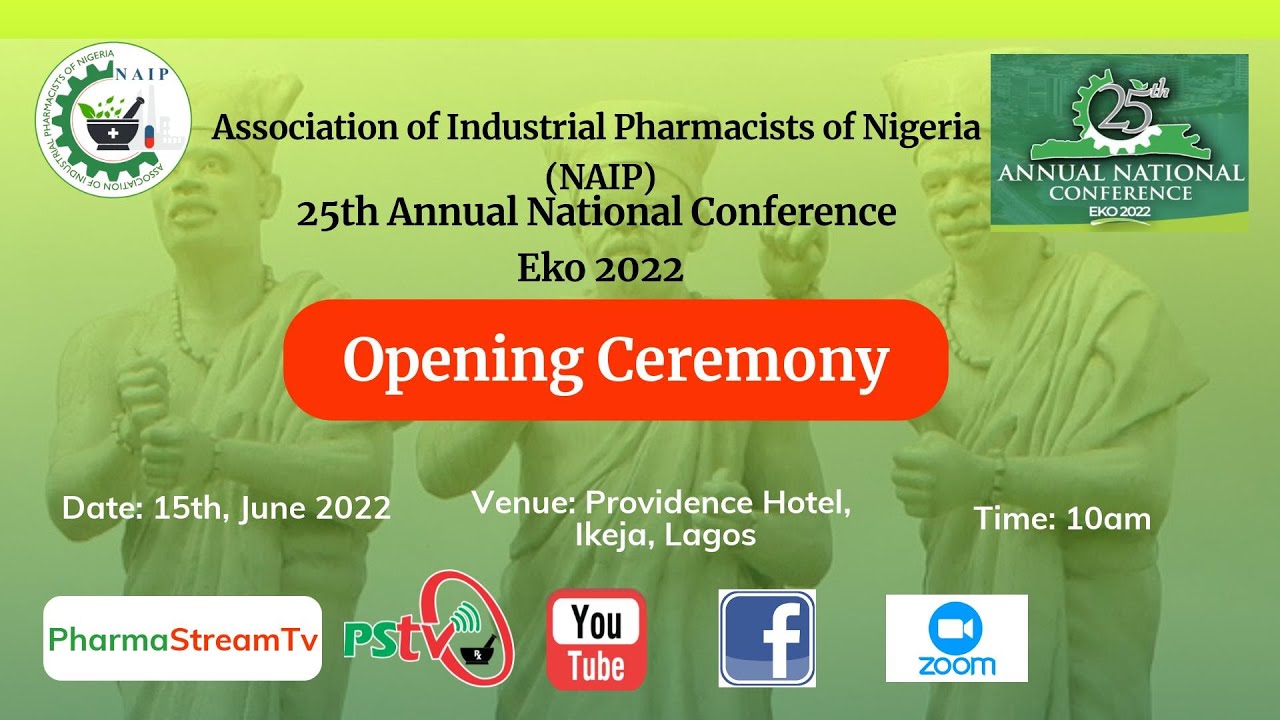
HELD FROM 14TH – 16TH JUNE, 2022 AT
PROVIDENCE HOTEL, 12A OBA AKINJOBI WAY, GRA IKEJA.
PREAMBLE
The Association of Industrial Pharmacists of Nigeria (NAIP) is a technical arm of the
Pharmaceutical Society of Nigeria (PSN) and the professional body of all registered and licensed
pharmacists in the pharmaceutical industry within Nigeria. It is dedicated to the promotion of the
pharmacy profession, pharmacy education/research, and pharmacy practice within the industrial
sector. NAIP has over 450 companies as corporate members representing over 1000
pharmacists from all over Nigeria held the 25th edition of its Annual Conference on June 14-16,
2022 at the Providence Hotel, 12a Oba Akinjobi Way, GRA Ikeja.
The conference involved a keynote address on the theme, sessions on the sub-theme, and panel
discussions to brainstorm and provide solutions to the myriad of problems plaguing Nigerian
Industrial Pharmacists.
The theme of the conference: The roles of industrial pharmacists in a depressed economy:
Opportunities, Challenges, and Solutions in providing essential drugs were addressed by the
keynote address speaker, Pharm. (Dr) Ifeanyi Okoye, Ph.D., OFR, MNI, FPSN, the Chairman/CEO
of Juhel Pharmaceuticals.
The first technical session, titled: “Professional collaboration and coordination as a panacea to
The industrial growth was expertly handled by Prof. Charles Okey Esimone FPSN, FAS, the vice
Chancellor of Nnamdi Azikiwe University.
The second technical session: Technology, Regulation, and Data Centricity in Strengthening
local capacity as the pharma industry evolves. The NAPA-NAIP example was given by Pharm
Jasper Onyeka, MBA, FPSN, the MD of Impact Pharmaceuticals.
The third technical session: The Role of Pharmacists in Vaccine Interventions, was presented.
by Pharm. Dr. Steve Onyia, FPSN, PhD.
The conference also featured a panel discussion with Prof. Lere Baale FPSN, Chairman, NAIP
Board of Trustees as the lead discussant and representatives of NAFDAC and NDLEA as panelists.
Attendance
The conference opening ceremony was chaired by Pharm. Ahmed I. Yakasai FPSN, Chairman,
Evans Baroque Pharma Ltd. Other dignitaries in attendance included
Prof. Cyril Usifo FPSN, President, Pharmaceutical Society of Nigeria(PSN);
Pharm. Deborah Egbuna FPSN, Deputy President South PSN;
Pharm. Gbenga Falabi FPSN, Secretary PSN;
Pharm. Ken Onuegbu FPSN, National Chairman of NAIP;
Pharm. Amaka Okafor, representative of the registrar, Pharmacists
Council of Nigeria (PCN);
Pharm. Ijeoma Nwankwo, representative of the DG of NAFDAC;
Dr. Aliyu Bankole, Medical officer in charge of NDLEA Lagos;
Pharm. Olakunle Ekundayo FPSN, GMD/CEO Drugfield Pharmaceutical Ltd.;
Pharm. Ade Popoola FPSN, MD Reals Pharmaceutical;
Pharm. Sola Solarin FPSN, President, Industrial Pharmacy section of FIP;
Prof. Lere Baale FPSN, Chairman NAIP Board of Trustees;
Pharm. Wale Oladigbolu FPSN, National Chairman ACPN;
Pharm. Bode Ogunjemiyo, National Chairman AHAPN;
Pharm. Victoria Ukwu FPSN, Immediate past National Chairperson ALPS;
Mr. Femi Shoremekun, President NIROPHARM;
Pharm. Frank Muonemeh, Executive Secretary PMGMAN; Pharm.
Sir Ike Onyechi FPSN; MD, Alpha Pharmaceutical Ltd.;
Pharm. Ifeanyi Atueyi FPSN, MD Pharmanews;
Mr. Varkey Varghese, President of Indian Pharmaceutical Manufacturers and
Importers of Nigeria (IPMIN);
Dr. Tolu Adewole; MD Sovereign wealth Fund;
Col. Nkiru Ibeh, MD, Nigeria Army Drug Manufacturing Company Bonny camp, among others.
The Conference was also attended by all NAIP Executive and Council members as well as NAIP
delegates from eleven states, including Lagos, Ogun, Oyo, Ondo, Kwara, Kano, Anambra,
Enugu, Plateau, Abuja, and the Edo States.
DECISIONS AND SUBMISSIONS
The Conference deliberated on the theme, sub-themes, panel discussion, and other contemporary
issues related to the theme and made the following observations and recommendations:
- The Conference recognized that the availability of essential medicines is key to the health of
any nation, including Nigeria, and that the Nigerian pharmaceutical industry, due to its
size and clout are expected to take the lead in solving Africa’s problem. Nigeria cannot
achieve an acceptable health policy without the ready availability of essential medicines,
which can only be made possible by NAIP in collaboration with other pharmacies
practitioners. - The Conference identified that economic depression leads to a rise in poverty, then to a
decline in hygiene and sanitization, which in turn increases diseases. As a result, there is
an increased need for pharmaceuticals and, therefore, the intervention of industrial
pharmacists. - The Conference acknowledged that a precondition to medicine security is localized
manufacturing and that local production of essential medicines has the potential to reduce
the infiltration of falsified and substandard medicines as well as improve the country’s
economy. - The conference identified some of the challenges faced by pharmaceutical industries to
include lack of infrastructure, inconsistent and mismanaged government policies, supply
chain challenges, weak industrial linkages, weak technology and engineering base, poor
access to forex, lack of petrochemical industries to enable Active Pharmaceutical
Ingredients (APIs) production as well as inadequate incentives. These discourage
industry efforts and result in a mass exodus of talent. NAIP therefore calls on the
Nigerian Government, to resolve the lingering crisis in securing Forex for the importation
and Manufacturing of essential medicines as this is becoming one of the greatest threats
to the growth of the Pharma Industry in Nigeria. - The Conference opined that the Nigerian pharmaceutical industry, as is, remains
underperforming with glaring untapped opportunity and therefore advised the
government to set up a 20-year rolling plan. This should enable the manufacturing sector
and regulatory agencies to achieve targeted sufficiency in some key and critical areas. - The conference encouraged making a conscious effort to welcome investment capital
with clear timelines. Technology transfer can be utilized in order to venture into Active
Pharmaceutical Ingredients (APIs) were manufactured, preventing experiences suffered during
the peak of the COVID-19 pandemic when countries limited exports of APIs to Nigeria
and other countries. NAIP, therefore, calls for strong policies from the Federal
The government of Nigeria supports both excipient and API production in the country. - The conference emphasized the need for a data-centric approach by the various pharma
groups coupled with robust analysis to enable proper presentation and reliable
information for government assistance. Also, there should be an intensive relationship
between technology regulation and data-centricity in the emerging growth of the
pharmaceutical industry. This synergy is necessary to further the growth of the industry. - The Conference urged the Regulatory Agencies on the need to ensure more efficient
product and premises registration and regulations in order to improve the quantity and
quality of products made in Nigeria, increase accessibility and reduce the need for certain
unnecessary imports. - The Conference pointed out the need for the government and interested multinationals to
work with industrial pharmacists in order to overcome commercial obstacles and achieve
economic growth. In addition, various interventions by the government should not be a
one-time practice. It should be made regular, substantial and geared towards encouraging
long-term research. - The conference noted that human capacity development is very key. Therefore,
collaboration with technical groups like the National Association of Pharmacists in
Academia (NAPA) by NAIP is imperative. Capacity building programs and skill
development in equipment maintenance, management, etc. should be administered to
assure quality and compliance. - The NAIP Conference enumerated the various ways NAIP can collaborate with NAPA.
This includes sponsorship of PhD students, setting up regional centers of excellence,
setting up trust funds by NAIP, while NAPA can involve NAIP members in experimental
teaching in their universities, carrying out sabbaticals in industries, etc. The leadership of
the Pharmaceutical Society of Nigeria can ensure good coordination for internship and
SIWES programs. - The Conference examined extant pieces of literature proving that pharmacists and
pharmaceutical sciences have a veritable role to play in vaccines (vaccine development
and interventions) and vaccination programs largely driven by their training in R & D,
manufacturing, distribution, storage, community-based participatory research, and
pharmacovigilance activities. - The Conference agreed that because technology such as robotics and digitization increase
workplace productivity, it is unquestionably the bedrock or engine room of the Pharma
Industry, and can make product registration stages easily communicated by NAFDAC to
registering companies, it should be embraced. - The Conference urged NAFDAC to be weary of the levies and fees imposed on
pharmaceutical companies as it is not a business agency. They should also look into their
regulations as they are more stringent when it comes to pharmaceuticals compared to
herbal mixtures with specific emphasis on approval and advertisements. - The Conference frowned at the restriction on the number of products registered by
NAFDAC per quarter as it discourages investment and reduces employment of
pharmacists. - The Conference recognized that the issue of the CTD format of dossier is still a major
hindrance to the registration of pharmaceutical products and proposed continuous training
on it to make product registration relatively easier for stakeholders. - The Conference identified as unacceptable the harassment by NDLEA officers of
pharmacists for medicines which they are licensed to handle, as well as the unnecessary
delay in the clearing of medicines at the port by NDLEA, which oftentimes led to
incurred demurrage. NDLEA is to make available to NAIP their list of schedules. - The Conference observed that a number of NDLEA officials are not up to date with the
functions of a registered pharmacist as well as the content of the license of a pharmacist.
As a result, capacity-building programs should be organized for them to better understand
the pharmacy terrain. - The conference agreed that we can achieve a lot in improving the healthcare needs of the
citizens through proper engagements and collaborations with major stakeholders and
regulatory authorities. As a result of this we shall continue to engage with customs,
NDLEA, NAFDAC, PCN etc. in finding solutions to the myriads of challenges facing the
Nigerian Pharma Industry. A workshop with the top officials of relevant regulatory
bodies and stakeholders was therefore proposed to rub minds and come up with practical
solutions that will enable more efficient and harmonized results. - The Conference expressed profound appreciation to all sponsors, donors, and invited
guests who made the program a huge success